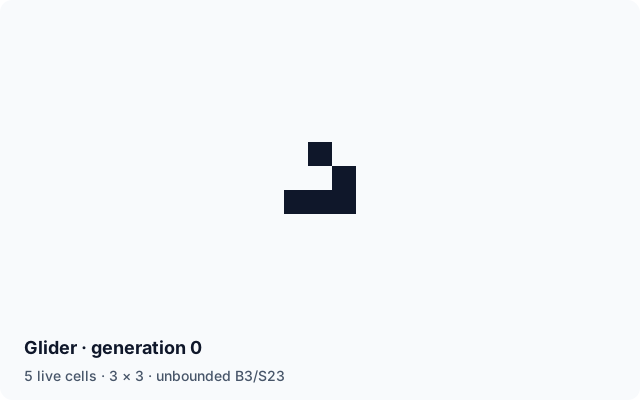
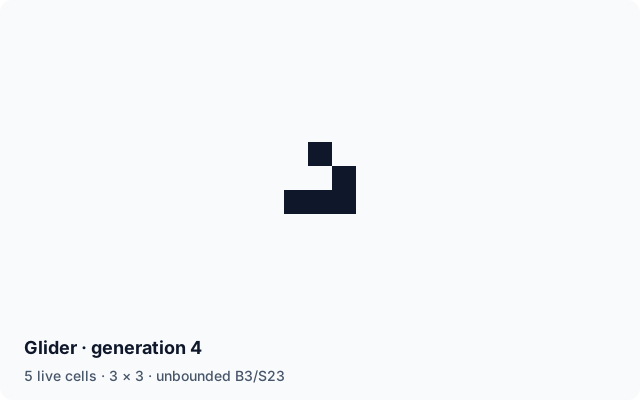
After four generations the shape returns one cell diagonally away.
These images are computed on an unbounded B3/S23 plane. Each frame is fitted to its own live-cell bounding box; compare the labels rather than the apparent scale.
Generation 0 · open full imageGeneration 1 · open full imageGeneration 2 · open full imageGeneration 4 · open full image
Live pattern
Run Glider here
Start with the canonical seed, step through individual generations, adjust speed, or edit cells on the board without leaving this page.
Simulation status
Generations0
Live cells5
Reference period4
Measured on this board
No complete repeat observed yet. The detector compares up to 128 recent shapes.
Outside this finite board, cells are held dead. Reference facts describe the preset on an unbounded plane; measured repeats describe this board.
Open the pattern in the lab, reduce the speed, and use single-step mode when a phase change is hard to see. The green preview marks births in the next generation; red outlines mark live cells that will die.
Learn the pattern family
Read the guide behind Glider
Use the runnable page for observation, then compare the pattern with related objects in the same family.