Pattern encyclopedia
Playable Conway's Game of Life patterns
Browse the structures that make Life worth studying. Each pattern includes a preview, a research note, and a live page where you can run it immediately.
28 playable patterns
Stable
Still lifes
Stable objects that never change after the first generation. They are the anchors and catalysts used to contain more active reactions.
Beehive
A six-cell still life with a compact hexagonal outline.
- Period
- 1
- Cells
- 6
- Size
- 4 x 3
Boat
The only five-cell still life and a common small ash object.
- Period
- 1
- Cells
- 5
- Size
- 3 x 3
Eater 1
A seven-cell still life that can absorb gliders in useful reactions.
- Period
- 1
- Cells
- 7
- Size
- 4 x 4
Periodic
Oscillators
Patterns that return to their starting phase after a fixed number of generations. They make periods, phases, and symmetry visible.
Compare oscillators by period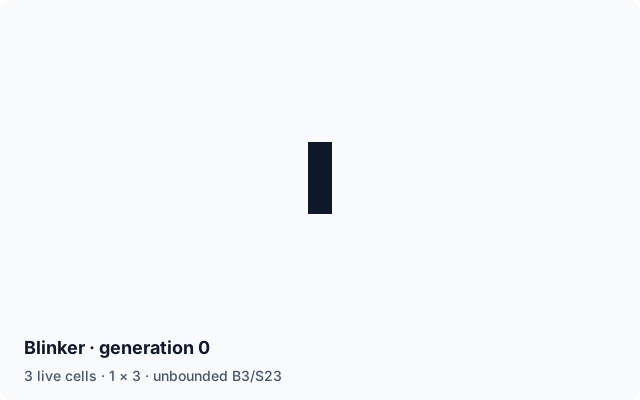
Blinker
The smallest oscillator, flipping between vertical and horizontal lines.
- Period
- 2
- Cells
- 3
- Size
- 3 x 3
Toad
A period-2 oscillator made from two offset rows of three cells.
- Period
- 2
- Cells
- 6
- Size
- 4 x 2
Beacon
Two blocks that repeatedly switch their touching corner cells.
- Period
- 2
- Cells
- 8
- Size
- 4 x 4
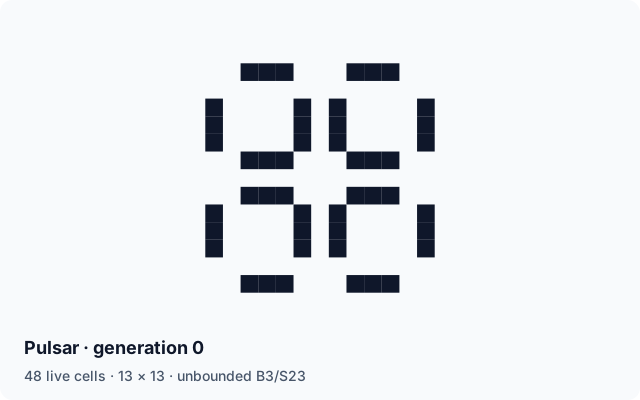
Pulsar
A large period-3 oscillator with strong fourfold symmetry.
- Period
- 3
- Cells
- 48
- Size
- 13 x 13
Pentadecathlon
A slim oscillator with a much longer cycle than its size suggests.
- Period
- 15
- Cells
- 12
- Size
- 3 x 10
Queen bee shuttle
A period-30 oscillator closely tied to early glider-gun history.
- Period
- 30
- Cells
- 20
- Size
- 22 x 7
Moving
Spaceships
Self-contained patterns that reappear translated across the grid. They are the basic signal carriers of Life engineering.
Compare spaceships by speed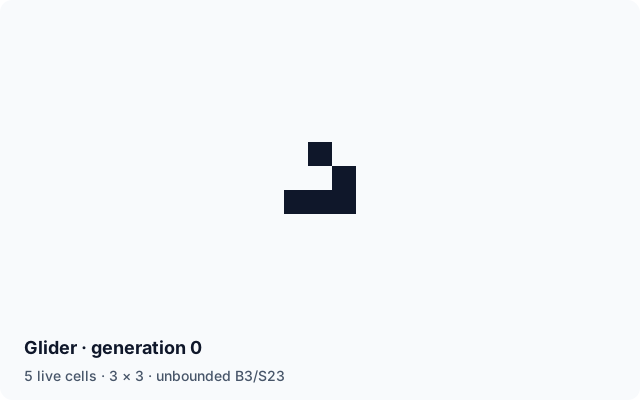
Glider
The smallest spaceship and the standard signal in Life.
- Period
- 4
- Cells
- 5
- Size
- 3 x 3
Middleweight spaceship
A wider c/2 spaceship with a larger body than the LWSS.
- Period
- 4
- Cells
- 11
- Size
- 6 x 5
Heavyweight spaceship
The broadest of the classic lightweight, middleweight, heavyweight trio.
- Period
- 4
- Cells
- 13
- Size
- 7 x 5
Loafer
A small orthogonal spaceship with an unusually slow c/7 speed.
- Period
- 7
- Cells
- 20
- Size
- 9 x 9
Chaotic
Methuselahs
Small seeds with unexpectedly long lifetimes. They are useful for studying growth, stabilization, and emergent debris fields.
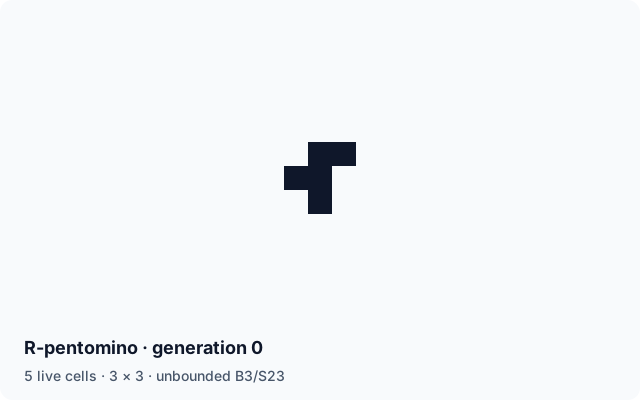
R-pentomino
A five-cell seed that takes over one thousand generations to stabilize.
- Period
- Long-lived seed
- Lifespan
- 1,103 generations
- Cells
- 5
- Size
- 3 x 3
Diehard
A small pattern famous for eventually vanishing completely.
- Period
- Dies after 130 generations
- Lifespan
- 130 generations
- Cells
- 7
- Size
- 8 x 3
Acorn
A seven-cell seed with a famously long chaotic evolution.
- Period
- Long-lived seed
- Lifespan
- 5,206 generations
- Cells
- 7
- Size
- 7 x 3
B-heptomino
A common seven-cell methuselah that produces a Herschel during its evolution.
- Period
- Long-lived seed
- Lifespan
- 148 generations
- Cells
- 7
- Size
- 4 x 3
Herschel
A seven-cell methuselah and important signal object in Life circuitry.
- Period
- Long-lived seed
- Lifespan
- 128 generations
- Cells
- 7
- Size
- 3 x 4
Edna
A 149-cell methuselah that pushed automated soup lifespans past 31,000 generations.
- Period
- Long-lived seed
- Lifespan
- 31,192 generations
- Cells
- 149
- Size
- 20 x 20
Emitter
Guns
Periodic factories that emit spaceships. They connect local reactions to larger signal circuits and computing constructions.
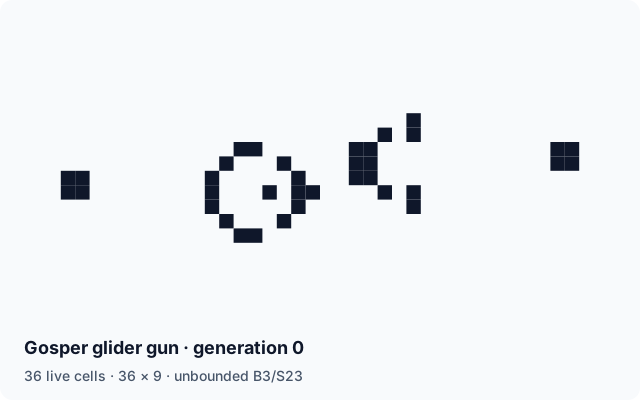
Gosper glider gun
The first known finite pattern with unbounded growth.
- Period
- 30
- Cells
- 36
- Size
- 36 x 9
Simkin glider gun
A compact true glider gun discovered by Michael Simkin in 2015.
- Period
- 120
- Cells
- 36
- Size
- 33 x 21
Growth
Growth patterns
Patterns that keep leaving debris, signals, or repeated output behind. They are a natural bridge from small examples to the advanced infinite board.
Switch engine
A small methuselah that can be used to build diagonal puffers.
- Period
- Long-lived seed
- Lifespan
- 3,911 generations
- Cells
- 8
- Size
- 6 x 4
Pufferfish
An almost natural c/2 puffer that leaves debris as it moves.
- Period
- 4
- Cells
- 44
- Size
- 15 x 12
Block-laying switch engine
A diagonal puffer that repeatedly lays blocks behind it.
- Period
- 288
- Cells
- 43
- Size
- 29 x 28