20 minutes · no coding required
Predict the next generation
Use the eight surrounding cells to count neighbours. Write your prediction before opening the simulator.
Name: ____________________ Date: ____________________
The rule card: B3/S23
A dead cell is born with exactly three live neighbours. A live cell survives with two or three. Every other live cell dies. Compute all next cells from the same old generation; do not update cells in place.
1. Explain a cell's next state
For each case, write “alive” or “dead” and give the rule: (a) a live cell with one neighbour; (b) a live cell with two; (c) a dead cell with three; (d) a live cell with four.
2. Follow a blinker for two steps
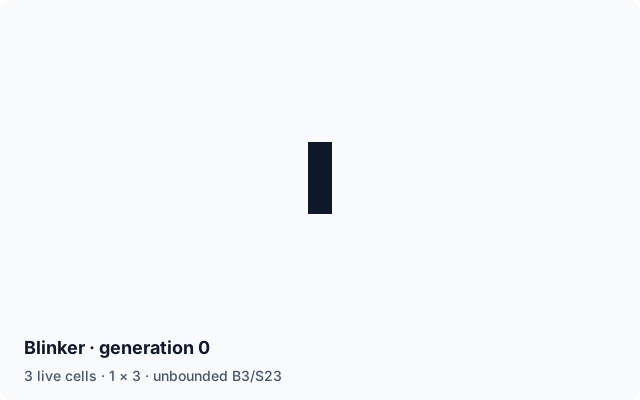
Draw generations 1 and 2. Which three cells survive or are born? What is the first generation that matches the original seed?
Check with the blinker simulator3. Measure a glider

Step four times and compare shape and position. How many cells does it move along each axis? Is the return at the same position or a translated one?
Check with the glider simulatorTeacher notes and answer key
Reveal answers after predicting
1: dead, alive, alive, dead. 2: the vertical line becomes horizontal and returns at generation 2 (or the reverse, depending on the seed orientation). 3: the glider returns after four generations translated by one cell along both axes; its diagonal speed is c/4.
Allow 5 minutes for the rule, 5 for the blinker, 5 for the glider and 5 for discussion. A board edge can alter the result. Ask students to keep the pattern away from the edge.
Extension: compare the outcomes of all 512 small seeds, or choose an oscillator with a longer period.